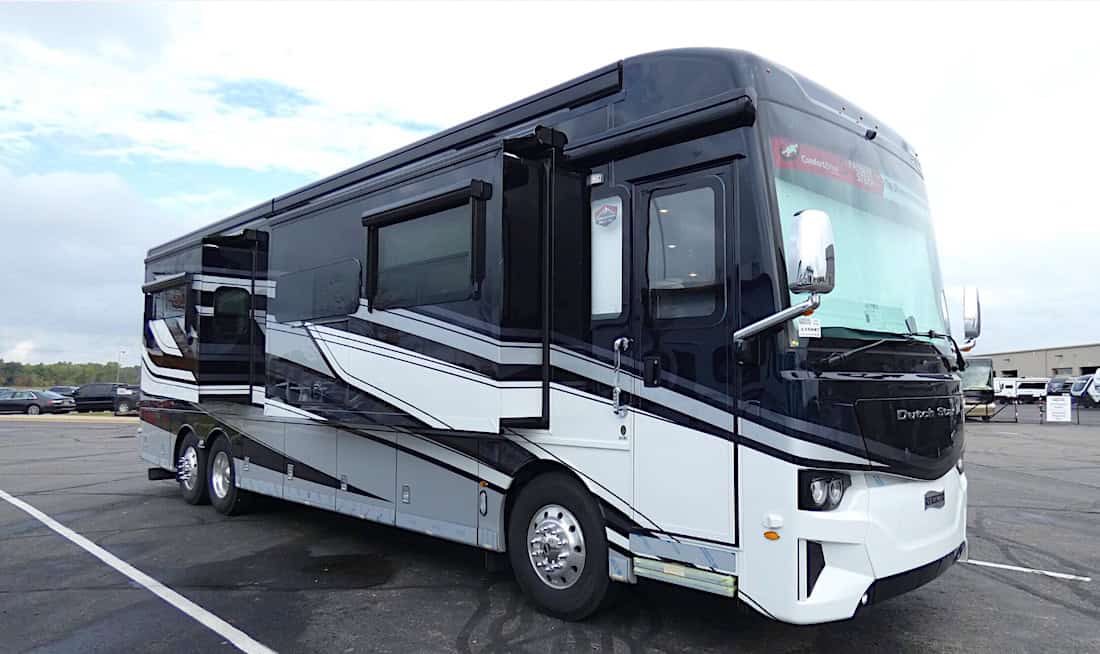
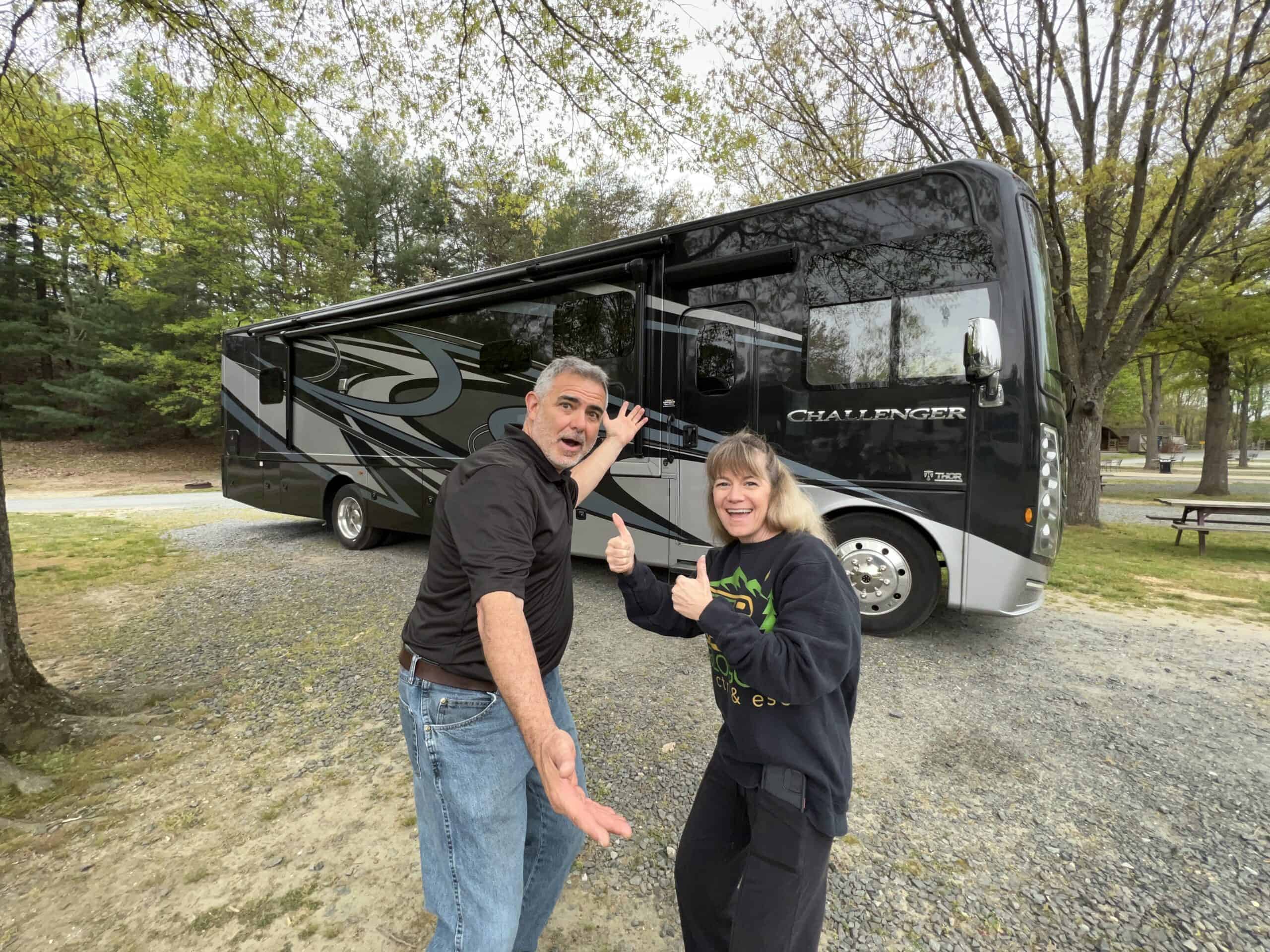
Our Class C motorhome averaged about 9 miles per gallon, and our Class A motorhome averages around 7 miles per gallon. That is just part of owning and traveling in a big, heavy RV.
But that does not mean your fuel economy is completely out of your control.
Over the years, I have learned that how I drive, how much weight I carry, how fast I go, and how well I maintain the RV can make a real difference. I am not going to promise you that a 35-foot motorhome will suddenly get 18 MPG. That is not realistic.
But if you can improve your fuel economy by even 1 mile per gallon, that can add up fast on a long RV trip.
The U.S. Department of Energy says aggressive driving can lower highway gas mileage by 15% to 30%, and fuel economy drops quickly at higher speeds, especially above 50 mph. That lines up with what I have seen in our motorhomes: slower, smoother driving saves fuel.
What Is Good Gas Mileage for a Motorhome?
A good gas mileage number depends on what kind of motorhome you own.
In my experience, these are realistic numbers:
Class A motorhomes often get around 6 to 8 MPG.
Class C motorhomes often get around 8 to 10 MPG.
Class B camper vans can do much better, often because they are smaller, lighter, and more aerodynamic.
Our Class C averaged about 9 MPG, while our Class A averages around 7 MPG. That may sound terrible if you are coming from a regular car or pickup truck, but it is normal for a motorhome.
The key is not chasing some fantasy number. The goal is to avoid wasting fuel because of bad habits, poor maintenance, too much weight, or driving too fast.
How to Get Better Gas Mileage in Your Motorhome:
13 Fuel-Saving Tips
1. Slow Down
This is the easiest fuel-saving tip and also the hardest one for many RVers to follow.
If you want better motorhome fuel economy, slow down.
I have found that driving slower gives me better gas mileage. That was true in our Class C, and it is true in our Class A. A motorhome is basically a big box pushing through the air, and the faster you go, the harder the engine has to work.
This is especially true once you get up around 65, 70, or 75 miles per hour.
In a car, you might not notice the difference as much. In a motorhome, you feel it at the fuel pump.
For us, 60 to 65 MPH is usually a much better range than trying to keep up with traffic at 70 or 75 MPH. I would rather arrive a little later and save fuel than burn extra gas just to shave a few minutes off the trip.
2. Stop Driving Your Motorhome Like a Car
This was one of the biggest lessons I had to learn.
When I drive my car, I can be guilty of accelerating too fast, braking too late, and rushing up to stoplights like I am going somewhere important. But if I drive a motorhome that way, my gas mileage drops fast.
You cannot drive a motorhome like a car and expect good fuel economy.
A motorhome is heavier, slower to accelerate, slower to stop, and much less aerodynamic. Every time you stomp on the gas pedal, you are asking the engine to move thousands of pounds. Every time you hit the brakes hard, you are throwing away momentum that took fuel to create.
That is why I started playing a little game when I drive the RV.
I try to use the brakes as little as possible.
That does not mean I drive unsafely. It means I look farther ahead, leave more space, coast earlier, and try to avoid unnecessary stops. If I see traffic slowing down ahead, I let off the gas early. If I see a red light, I stop accelerating toward it.
That one mindset shift can make a real difference.
3. Leave More Following Distance
Leaving more space between you and the vehicle in front of you is not just safer. It also helps fuel economy.
When you follow too closely, you are constantly reacting. Gas. Brake. Gas. Brake. Gas. Brake.
That kind of driving kills gas mileage.
When you leave more room, you can coast more often. You can ease off the throttle instead of hitting the brakes. You can let traffic smooth itself out before you react.
This is how truck drivers think, and it is how RVers should think too.
The goal is not to drive slowly in a dangerous way. The goal is to drive smoothly.
4. Use Cruise Control on Flat Highways
Cruise control can help on long, flat highways because it keeps your speed steady.
That matters because small speed changes can waste fuel. Many drivers do not realize how often they speed up and slow down, even on the highway. Cruise control smooths that out.
But there is one big warning.
Do not blindly use cruise control in the mountains.
On steep grades, cruise control may try too hard to maintain your set speed. It may downshift, rev the engine, and burn more fuel than necessary. In hilly or mountainous areas, I prefer to manage the throttle myself.
Use cruise control when the road is flat and traffic is steady. Turn it off when the terrain gets steep or traffic gets messy.
5. Lighten the Load
Weight matters.
The heavier your motorhome is, the harder your engine has to work. That means worse fuel economy.
This does not mean you need to travel like a minimalist with one fork and two shirts. But it does mean you should stop carrying stuff you never use.
A few things to check:
Are your storage bays full of gear you have not touched in two years?
Are you carrying tools, chairs, hoses, and accessories you never use?
Are you traveling with a full freshwater tank when you do not need to?
Are you hauling extra firewood, bottled water, or duplicate gear?
Water is heavy. Fuel is heavy. Gear is heavy. It all adds up.
Before a long trip, I like to think through what we actually need. RVers are famous for packing for every possible emergency, but at some point your motorhome becomes a rolling storage unit.
6. Travel With Less Fresh Water When You Can
Fresh water weighs about 8.3 pounds per gallon.
So if you are carrying 80 gallons of fresh water, that is more than 660 pounds of water.
Sometimes you need to travel with water. If you are boondocking or heading somewhere without hookups, then yes, fill the tank.
But if you are driving from one full-hookup campground to another, you may not need to carry a full freshwater tank the whole way.
The same goes for gray and black tanks. Dump before you travel when possible. Carrying waste water down the highway is just extra weight.
This is not just about fuel economy either. Less weight can also make the RV handle better.
7. Keep Your Tires Properly Inflated
Tire pressure is one of the most overlooked fuel economy issues.
Underinflated tires create more rolling resistance, which means the engine works harder. They can also run hotter, wear faster, and become more dangerous.
FuelEconomy.gov says underinflated tires can lower gas mileage, and properly inflated tires are safer and last longer.
For motorhomes, you should not just guess at tire pressure. Check the manufacturer’s recommendations, weigh your RV if possible, and use the proper inflation pressure for your load.
I also think every motorhome owner should carry a good tire pressure gauge and consider a TPMS. A tire problem on a motorhome is not like a tire problem on a small car. It can cause serious damage and ruin a trip fast.
8. Stay on Top of Maintenance
A poorly maintained motorhome will usually burn more fuel.
Dirty air filters, old spark plugs, worn ignition components, dirty fluids, dragging brakes, and poor alignment can all make the RV work harder than it should.
Regular maintenance is not exciting, but it matters.
At a minimum, keep up with:
Oil changes
Air filter replacement
Spark plugs and ignition service
Fuel filter service if applicable
Transmission service
Brake inspections
Wheel alignment
Tire condition and pressure
A motorhome already has enough working against it. Do not make it worse by neglecting basic maintenance.
9. Plan Your Route Before You Drive
The shortest route is not always the most fuel-efficient route.
A route with steep grades, stop-and-go traffic, bad roads, or heavy city driving can burn more fuel than a slightly longer but smoother route.
This is where trip planning helps.
I would rather take a route that is easier on the RV, has fewer stressful turns, avoids low clearances, and keeps me moving smoothly. Stop-and-go traffic is terrible for fuel economy because you are constantly moving a heavy RV from a dead stop.
Planning fuel stops also matters. Wandering around looking for diesel or gas in a huge motorhome is not fun, and it can waste fuel.
This is one reason we use RV Trip Wizard for RV travel planning. It helps us plan routes, campground stops, and fuel stops before we are already stressed behind the wheel.
10. Avoid Rush Hour Whenever Possible
Rush hour traffic is bad in a car. In a motorhome, it is worse.
You burn fuel idling. You burn fuel accelerating. You burn fuel braking. Then you do it over and over again.
If leaving an hour earlier or an hour later helps you avoid major traffic, it can be worth it.
This is especially true near big cities. I would much rather plan my travel day around traffic than sit in it with a Class A motorhome burning fuel and testing my patience.
A smoother drive is usually a cheaper drive.
11. Watch the Wind
Wind can have a huge impact on motorhome fuel economy.
Driving into a strong headwind is like climbing a hill all day. Your engine has to work harder because your motorhome is pushing against the air.
A tailwind can help. A headwind can hurt. A crosswind can make the drive more tiring and less efficient.
You cannot control the wind, but you can be aware of it. If you have flexibility, sometimes it makes sense to delay a drive or change your travel schedule when the wind is really bad.
This is especially true out west where long, open stretches of highway can come with serious wind.
12. Be Smart With Air Conditioning
Air conditioning uses energy, and energy comes from fuel.
In a gas motorhome, running the dash AC can affect fuel economy. Running the generator to power rooftop AC units also burns fuel. So either way, cooling the RV has a cost.
FuelEconomy.gov notes that hot weather and air conditioning can reduce fuel economy, especially under certain driving conditions.
That does not mean you should suffer in a hot RV just to save a few dollars. Safety and comfort matter too.
But you can be smart about it.
Cool the RV before you leave if you are plugged in.
Use window shades.
Park in shade when possible.
Run fans when they help.
Avoid traveling during the hottest part of the day when possible.
Use the AC when you need it, but understand that it is part of your fuel-cost equation.
13. Do Not Waste Money on Gimmicks
Every RV owner wants better fuel economy, and that creates a market for miracle products.
Fuel-saving chips. Magic additives. Weird gadgets. Big promises.
I am skeptical of anything that promises a huge MPG increase without changing how you drive or maintain your RV.
Could some products help in certain situations? Maybe.
But most motorhome owners will get better results from boring things:
Slow down.
Drive smoother.
Keep your tires inflated.
Maintain the RV.
Carry less weight.
Plan better routes.
Avoid traffic.
That is not flashy, but it works.
If someone tells you they found a cheap gadget that turned their Class A into a fuel-sipping economy car, I would be very careful.
How Much Can Better Fuel Economy Save You?
Let’s keep the math simple.
If your motorhome gets 7 MPG and you drive 3,000 miles, you will use about 429 gallons of fuel.
If you improve to 8 MPG, you will use about 375 gallons.
That is a savings of about 54 gallons.
If fuel costs $4 per gallon, that is about $216 saved on one 3,000-mile trip.
That is why even a small MPG improvement matters in a motorhome.
You are probably not going to double your fuel economy. But improving by 1 MPG can still put real money back in your pocket.
Gas vs. Diesel Motorhomes: Which Gets Better Fuel Economy?
Diesel motorhomes often get better fuel economy than gas motorhomes, but that does not automatically mean diesel is cheaper overall.
Diesel motorhomes usually cost more to buy. They can cost more to maintain. Diesel fuel prices also vary, and sometimes diesel is more expensive than gas.
The advantage of diesel is usually torque, towing capacity, longevity, and performance in larger motorhomes. Fuel economy can be better, but that should not be the only reason you buy one.
If you are comparing gas and diesel motorhomes, look at the full cost of ownership, not just MPG.
My Best Advice for Better Motorhome MPG
The biggest change is your driving style.
That was true in our Class C, and it is true in our Class A.
Our Class C averaged around 9 MPG. Our Class A averages around 7 MPG. But in both RVs, I could see the difference when I slowed down, accelerated gently, coasted earlier, and stopped driving like I was in a car.
The best fuel-saving tool is not a gadget.
It is your right foot.
Drive smoother. Leave more room. Stop rushing. Plan better. Carry less. Keep the RV maintained.
That is how you maximize fuel economy in a motorhome.
Not perfectly. Not magically.
But enough to make a difference.
FAQs About Motorhome Fuel Economy
1. What is the average gas mileage for a motorhome?
Most Class A motorhomes get around 6 to 8 MPG, while many Class C motorhomes get around 8 to 10 MPG. Our Class C averaged about 9 MPG, and our Class A averages around 7 MPG.
2. Does driving slower really improve motorhome gas mileage?
Yes. In my experience, slower driving improves motorhome fuel economy. The faster you drive, the harder the engine works to push that big RV through the air.
3. Should I use cruise control in a motorhome?
Cruise control can help on flat highways because it keeps your speed steady. But I usually turn it off in the mountains because it can downshift aggressively and burn more fuel trying to hold speed.
4. Does running the generator while driving use more fuel?
Yes. If your generator runs off your motorhome’s fuel tank, it burns fuel while you drive. Sometimes it is worth it to run the rooftop AC, but it is not free.
5. What is the easiest way to improve motorhome fuel economy?
The easiest way is to slow down and drive smoother. Avoid hard acceleration, leave more following distance, coast earlier, and stop braking unnecessarily.
Related Reading:
- 8 Class C RVs With the Best Gas Mileage
- Can I Run My Motorhome Rooftop A/C While Driving?
- 9 Best Air Compressors for RV Tires
About the Author:

Hi, I’m Mike Scarpignato, co-founder of TravelTrailerPro.com, RVBlogger.com, and MotorhomeFAQs.com and the RVBlogger YouTube Channel.
My wife, Susan, and I have been creating RV content since 2018. We travel the country visiting RV shows, touring dealerships, reviewing campers, testing gear, and spending plenty of time camping in our motorhome. Most of what we share comes from actually using RVs, making mistakes, fixing problems, and learning what works in the real world.
Susan is usually behind the camera on our RVBlogger YouTube channel, which has more than 215,000 subscribers. We also run RV Camping for Newbies, a private Facebook group with more than 275,000 members, and publish four weekly RV newsletters reaching more than 85,000 subscribers.
Our goal is simple: help beginners and experienced RVers choose the right RV, avoid expensive mistakes, and enjoy the RV lifestyle with a little less frustration.