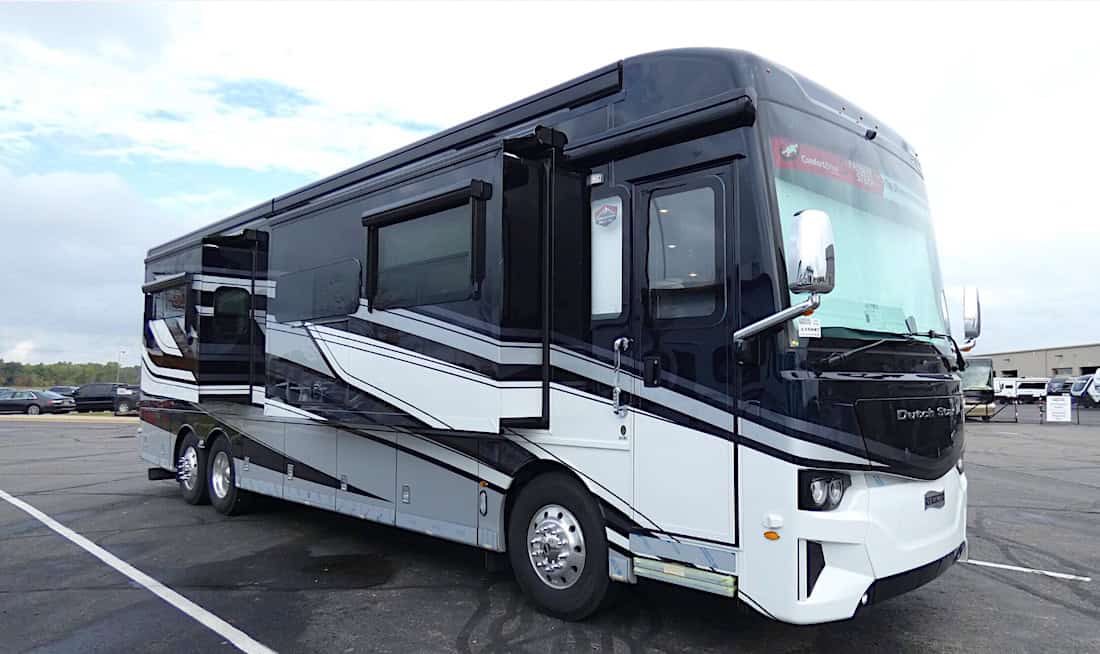

One of the most common questions Susan and I hear from new RV owners is: “Can I run my motorhome rooftop A/C while driving?” The short answer is yes, you can — and in the middle of summer, you’ll probably want to.
When you’re rolling down the highway in a Class A motorhome, or even a Class C, the dash A/C alone just doesn’t cut it. Running the rooftop air conditioner keeps the whole coach comfortable, not just the driver’s seat.
We’ve learned this the hard way. A few years back, Susan and I were driving through Texas in July, and even though the dash A/C was blasting, the inside of the rig felt like an oven. Our two rooftop A/C units saved the day — and kept our pup cool in the back.
Why Run Both A/C Units While Driving?
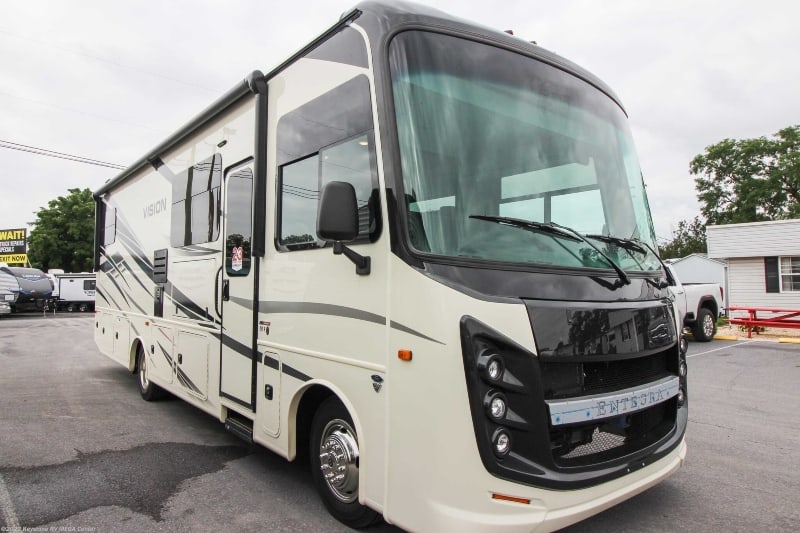
Running both the dash A/C and the rooftop A/C creates whole-home cooling, which is especially important on a hot, sunny day. Large windows create a greenhouse effect, and even with blackout curtains, the sun can quickly heat up the coach.
Don’t forget about the generator itself — it generates heat under the floor, which can rise into your living space. That’s why many RVers, including us, keep both rooftop units running while on the road. Not only does it keep everyone (including pets) comfortable, but it also means your motorhome is cool and ready to go when you arrive at your campsite.
Is the Rooftop A/C Connected to the Dash A/C?
No, the rooftop A/C and the dash A/C are separate systems. Your dash A/C works just like it does in a large SUV or pickup truck, while the rooftop A/C is powered by the generator. Both the engine and generator typically pull fuel from the same tank, so yes, it will impact your fuel mileage slightly. But let’s be honest — Class A and Class C motorhomes aren’t winning any fuel-efficiency awards anyway!
Can I Run the Furnace or A/C While Driving?
Absolutely. Just as you can run the rooftop A/C, you can also run the RV furnace while driving in winter. Imagine driving through Minnesota in February with only dash heat — anyone sitting in the back would be freezing! Running the rooftop A/C or furnace ensures the whole rig stays comfortable, year-round.
How Much Fuel Does the Generator Use?
Most onboard gas or diesel generators use about half a gallon of fuel per hour when powering the rooftop A/C. If you’re driving eight hours in the summer, that’s roughly four gallons. For propane generators, you’ll need to check state laws, since some states restrict propane use on the road. Planning ahead is the key.
Pro tip: Turn on your rooftop A/C about an hour before you hit the road. That way, your RV starts cool and doesn’t have to fight the midday sun as hard.
Is It Safe to Run the Rooftop A/C While Driving?
Yes, it’s completely safe. The rooftop unit runs on its own system, just like when you’re parked at a campground. Running the generator while driving is also safe, as long as you keep up with regular maintenance.
In fact, it can even help your engine. The dash A/C compressor takes power from the engine. By relying more on the rooftop A/C, you can give your motorhome a little extra horsepower for climbing hills and mountains.
The only thing to watch out for is electrical load. On 30-amp systems, you can usually run the fridge and one A/C together, but running too many appliances at once may trip a breaker. Susan and I installed Micro-Air Easy Starts on our two rooftop units, which makes it much easier to run them on 30 amps without any issues. It’s one of the best upgrades we’ve ever made.
Do I Have to Run the Generator for the A/C?
Unless you have an unusually large solar setup, yes — the generator has to be running to power your rooftop A/C. The coach batteries won’t last long, and the A/C isn’t tied into the engine. The good news is, running your generator while driving also charges your house batteries, which is a nice bonus.
Will Running the Rooftop A/C Use More Fuel?
Yes, but not much. The generator will burn about half a gallon of fuel per hour. For us, that small cost is well worth it in exchange for a comfortable ride. After all, nobody wants to arrive at a campsite sweaty, cranky, and waiting hours for the RV to finally cool down.
Pros and Cons of Running the Rooftop A/C While Driving
Pros:
- Keeps the entire RV cool, not just the cab
- Family and pets in the back stay comfortable
- Prepares the RV so it’s cool when you arrive
- Charges your house batteries while driving
- Helps reduce engine load on long climbs
Cons:
- Slightly reduces fuel economy
- Propane generators may not be legal in all states
- Generators can run hot in stop-and-go traffic
Final Thoughts on Running Your Motorhome Rooftop A/C
So, can you run your motorhome rooftop A/C while driving? Yes — and in many cases, you should.
For us, it’s a must in the summer. We travel a lot in hot states like Florida and Texas, and running the rooftop units keeps everyone comfortable — including our dog. In winter, we’ve used the furnace while driving so the whole coach stays warm.
As long as you practice routine maintenance on your generator and check local propane laws, running the rooftop A/C on the road is both safe and smart. At the end of the day, RVing is about enjoying the journey. Staying cool (or warm) while you’re on the move makes that journey a lot more enjoyable.
Related Reading:
1. Is a 50-Amp RV Plug 110 or 220?
2. How Much Freon Does Motorhome A/C Hold
3. Does an RV Fridge Work Better on Gas or Electric?
4. Do RV Outlets Work on Battery Power?
About the Author:

Hi, I’m Mike Scarpignato, co-founder of TravelTrailerPro.com, RVBlogger.com, and MotorhomeFAQs.com and the RVBlogger YouTube Channel.
My wife, Susan, and I have been creating RV content since 2018. We travel the country visiting RV shows, touring dealerships, reviewing campers, testing gear, and spending plenty of time camping in our motorhome. Most of what we share comes from actually using RVs, making mistakes, fixing problems, and learning what works in the real world.
Susan is usually behind the camera on our RVBlogger YouTube channel, which has more than 215,000 subscribers. We also run RV Camping for Newbies, a private Facebook group with more than 275,000 members, and publish four weekly RV newsletters reaching more than 85,000 subscribers.
Our goal is simple: help beginners and experienced RVers choose the right RV, avoid expensive mistakes, and enjoy the RV lifestyle with a little less frustration.