Published October 7, 2023 | Last updated August 3, 2026
Most people do not need a special RV license or commercial driver’s license to drive a motorhome for personal use. However, your home state may require a noncommercial Class A or Class B license, an RV endorsement, or another special license if your motorhome exceeds certain weight or length limits.
The most common number to watch is 26,001 pounds. A few states also use motorhome length, combined weight, or the weight of the vehicle you tow behind the motorhome.
This topic gets confusing because many articles call every special license a CDL. That is not correct.
In many states, a privately owned motorhome is exempt from commercial licensing. You may still need a higher-class noncommercial license, though.
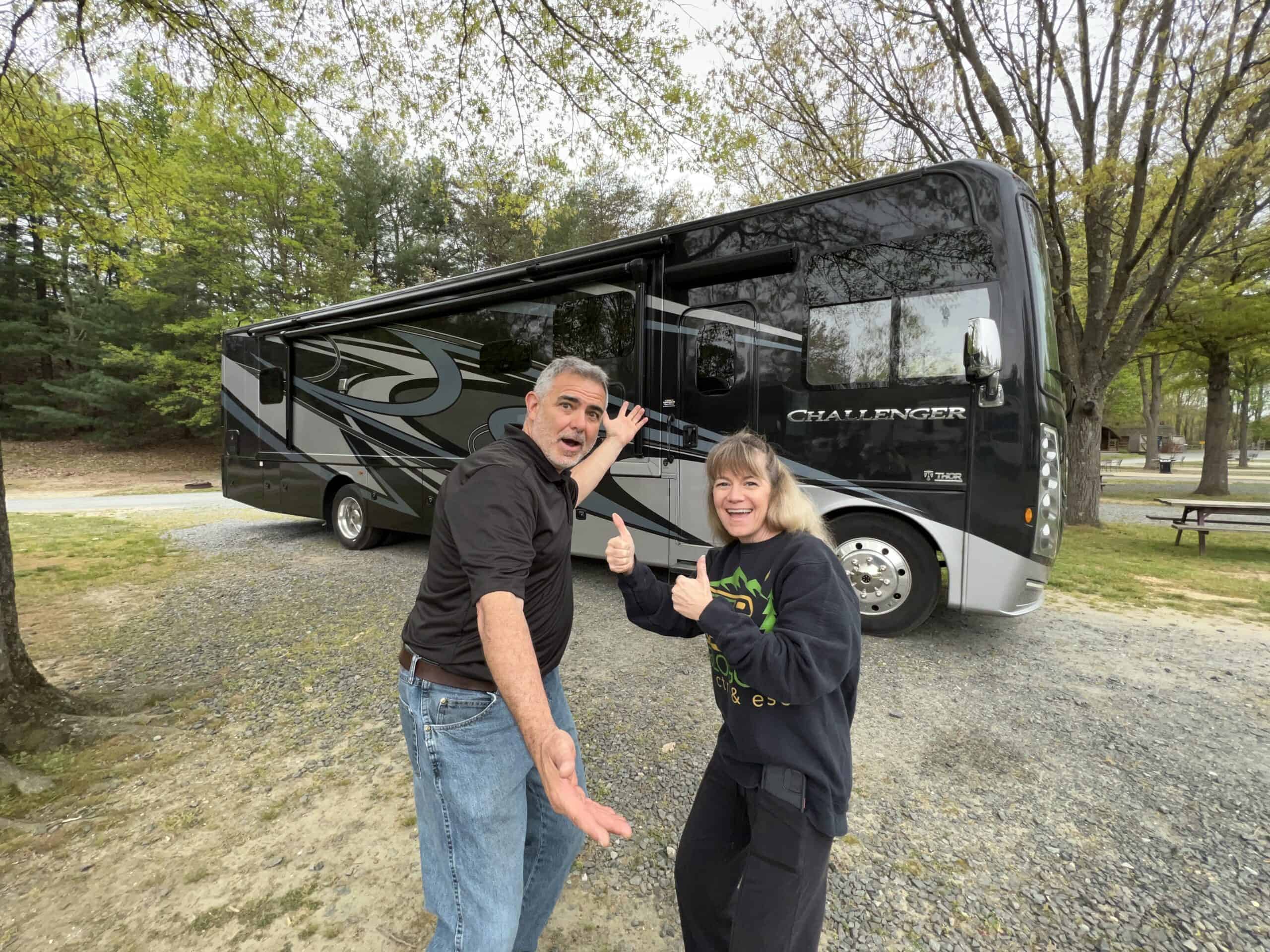
I drive a Thor Challenger Class A motorhome, and I did not need a special license based on its weight and Maryland’s requirements. But I still had to learn how to handle a much larger vehicle safely. The license question and the driving-skill question are not the same thing.
Do You Need a Special License to Drive a Motorhome?
For most privately owned Class B and conventional Class C motorhomes, a regular driver’s license is enough.
You are more likely to need a special license when you drive:
- A large Class A with a gross vehicle weight rating above 26,000 pounds
- A heavy Super C motorhome
- A motorhome longer than a state’s length threshold
- A motorhome towing a vehicle or trailer that pushes the combination into a higher license class
The Federal Motor Carrier Safety Administration says states may create their own licensing requirements for recreational vehicles used for nonbusiness purposes. It also tells drivers to verify the rules in their home state.
That means there is no single federal answer that applies to every privately owned motorhome.
Your Home State’s License Rules Usually Control
The license you need is generally determined by the state that issued your driver’s license—not every state you pass through on a road trip.
States ordinarily recognize valid out-of-state driver’s licenses through reciprocity. You still have to follow the traffic, equipment, length, weight, speed, and towing laws of the state you are traveling through, but you do not normally obtain a new driver’s license every time you cross a state line.
This is an important correction because RV licensing articles often tell readers to meet the driver-license requirements of every destination state.
Start with your home-state DMV or motor vehicle agency. Give them the motorhome’s:
- Gross vehicle weight rating, or GVWR
- Gross combination weight rating, or GCWR
- Overall length
- Number of axles
- Weight rating of anything you plan to tow
Do not simply tell the DMV employee that you own a “Class A” or “Class C.” The motorhome class name does not provide enough information to determine the driver-license class.
CDL vs. Noncommercial Class A or Class B License
A CDL is a commercial driver’s license. It is generally associated with operating commercial trucks, buses, and other commercial motor vehicles.
A private motorhome used only for recreation is often exempt from CDL requirements.
However, some states use the same Class A and Class B weight categories for noncommercial drivers. That can create confusing phrases such as:
- Noncommercial Class A
- Noncommercial Class B
- Exempt Class A or Class B
- Recreational vehicle endorsement
- Personal-use vehicle endorsement
Those are not necessarily CDLs. They may not require the same medical certification, commercial training, or federal requirements that apply to professional commercial drivers.
Why 26,001 Pounds Matters
Many states divide larger vehicles at a GVWR of 26,001 pounds.
For a single vehicle, a Class B license category often begins at 26,001 pounds.
For a combination, a Class A category often applies when:
- The gross combination weight rating is 26,001 pounds or more, and
- The towed vehicle has a GVWR above 10,000 pounds
But do not assume every state applies those thresholds to personal-use RVs in exactly the same way.
Also, check the rating—not just what the motorhome weighs on a scale today. Licensing rules may refer to GVWR or GCWR rather than actual loaded weight.
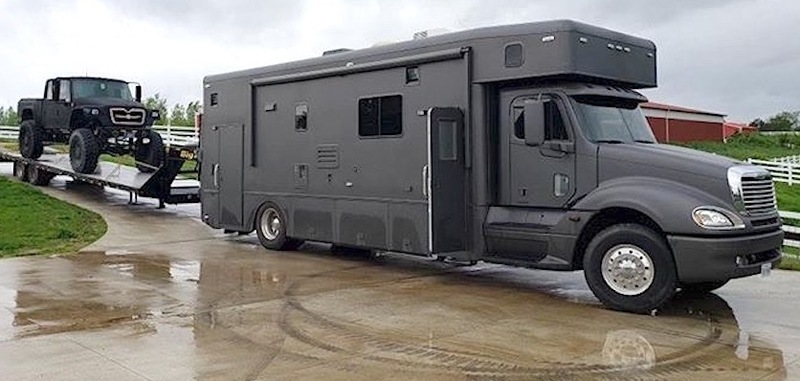
Do You Need a Special License for a Class B Motorhome?
Usually not.
Most Class B camper vans are well below 26,001 pounds and far below the motorhome length limits used by states such as California.
A standard driver’s license is normally enough for a privately owned Class B camper van. Still, confirm the rules if you have an unusually heavy conversion or use the van for commercial purposes.
Do You Need a Special License for a Class C Motorhome?
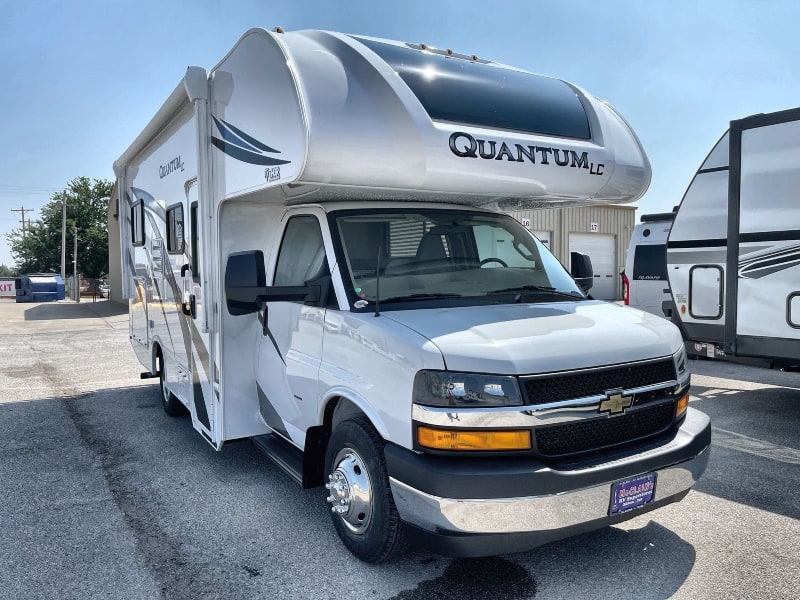
Most conventional Class C motorhomes can be driven with a regular driver’s license.
Many are below 26,001 pounds GVWR and shorter than 40 feet.
But it is wrong to say a Class C can never exceed 26,000 pounds.
Some Super C motorhomes are built on heavy-duty truck chassis and have GVWRs well above 26,000 pounds. A Super C can therefore trigger the same special-license rules as a large Class A.
Towing can also matter. A large Super C pulling a heavy trailer may fall into a different license category based on GCWR and the trailer’s GVWR.
Do You Need a Special License for a Class A Motorhome?
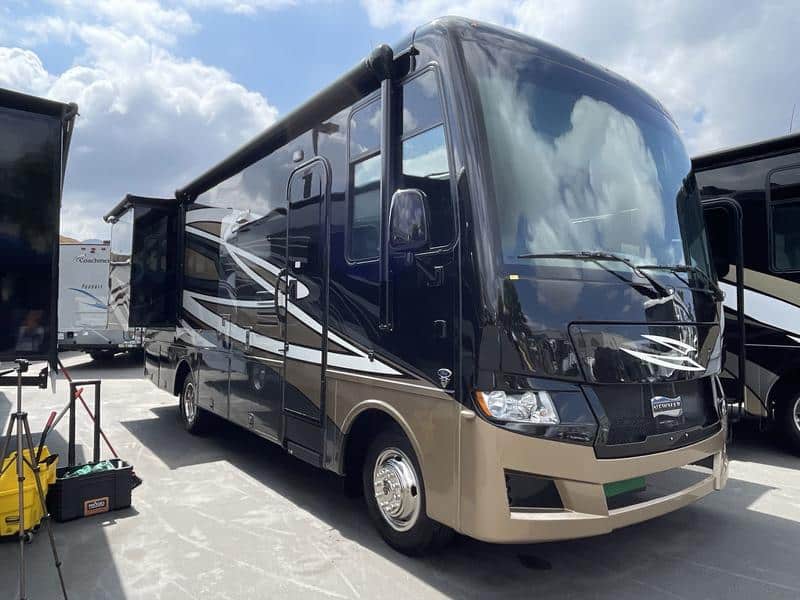
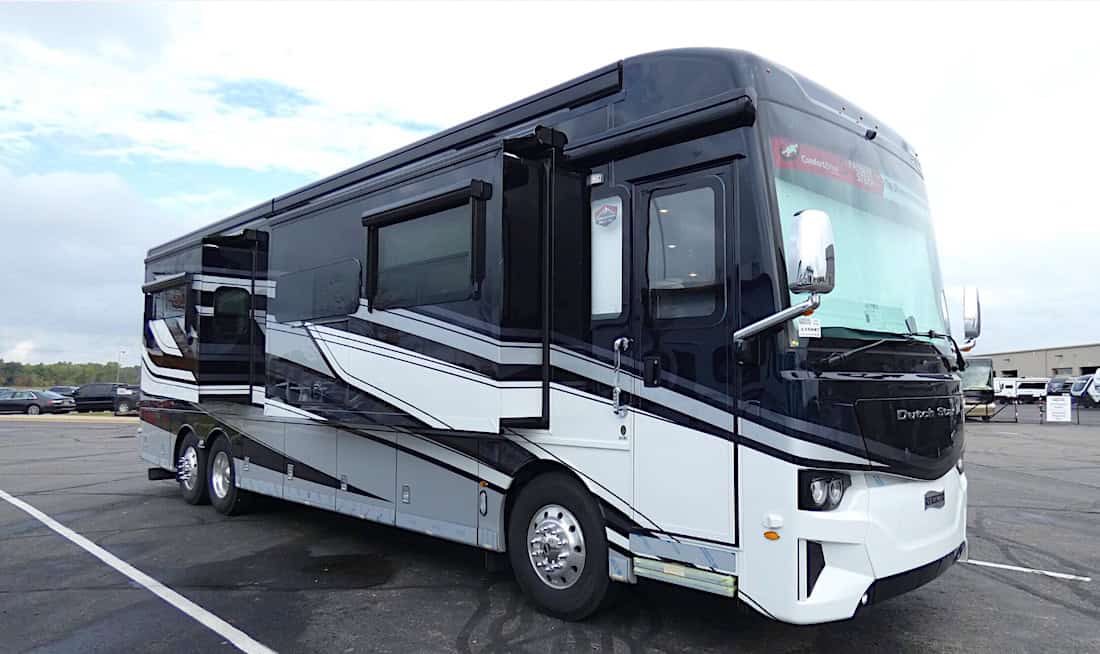
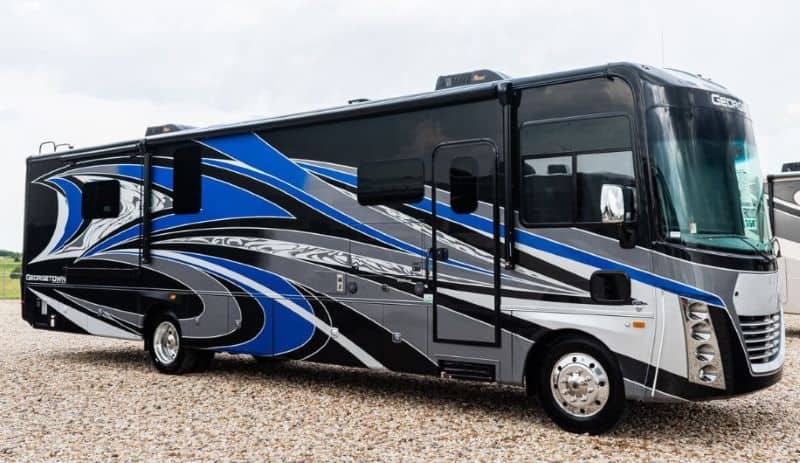
A Class A is the motorhome type most likely to require a special license because many diesel pushers and larger gas motorhomes exceed 26,000 pounds.
But owning a Class A does not automatically mean you need a CDL—or any special license.
Our Thor Challenger is a Class A motorhome, but I can legally drive it with my regular Maryland license because of its weight rating and the license class that applies to me.
A large diesel pusher above 26,000 pounds could produce a different answer.
States With Notable Special RV License Requirements
License laws change, and state terminology is inconsistent. The examples below are not a substitute for confirming your exact vehicle with your licensing agency.
California: A basic Class C license can operate a housecar up to 40 feet. A housecar over 40 feet but not over 45 feet requires a noncommercial Class B license. California also has separate noncommercial Class A rules for certain heavy travel trailers and fifth wheels.
Illinois: Recreational vehicles used as personal or family transportation are exempt from CDL requirements, but an appropriate non-CDL Class A or Class B license may still be required for vehicles in those weight classes.
Maryland: Maryland issues noncommercial Class A and Class B licenses. A driver moving to a higher noncommercial class may need a learner’s permit, knowledge test, and skills test.
Nevada: Nevada requires a noncommercial Class A or Class B license for a large private vehicle that falls into those weight classifications. Nevada also uses a J endorsement in certain towing situations.
New York: New York uses an “R” endorsement for certain recreational or rental vehicles over 26,000 pounds GVWR or 40 feet in length. The endorsement can be added to a Class D or E license.
Pennsylvania: Pennsylvania requires a noncommercial Class B license for a single vehicle rated at 26,001 pounds or more. A qualifying heavy combination requires a noncommercial Class A license.
South Carolina: South Carolina uses noncommercial Class E and Class F licenses for large noncommercial vehicles and combinations, including qualifying recreational vehicles.
Texas: Personal-use RVs are exempt from CDL requirements, but Texas says an RV driver may still need an exempt Class A or Class B driver’s license based on the vehicle’s weight classification.
Wyoming: Wyoming uses a Z endorsement for a recreational vehicle or combination with a GVWR of 39,001 pounds or more.
These examples show why the sentence “RVs do not require a special license” is too broad. They also show why saying “large RVs require a CDL” is usually the wrong explanation.
How to Check Your Motorhome’s Weight Rating
Look for the federal certification label or vehicle information label supplied by the manufacturer.
Depending on the motorhome, you may find it:
- Near the driver’s seat
- On the wall beside the driver
- Inside a cabinet
- Near the entry door
- In the owner’s documentation
The important numbers include:
- GVWR: The maximum rated weight of the loaded motorhome
- GCWR: The maximum rated combined weight of the motorhome and anything it tows
- GAWR: The maximum rated weight allowed on each axle
The number on your registration may help, but I would verify it against the manufacturer’s rating label before calling the DMV.
Does Towing a Car Change the License You Need?
It can.
Many motorhome owners tow a small car with all four wheels down. The towed vehicle’s weight may be well below the 10,001-pound threshold that commonly separates Class A and Class B combinations.
But a heavy enclosed trailer, stacker trailer, vehicle hauler, or large equipment trailer can change the answer.
You need to know:
- The motorhome’s GVWR
- The motorhome’s GCWR
- The towed vehicle or trailer’s GVWR
- Your home state’s definition of a Class A or Class B noncommercial vehicle
Do not confuse towing capacity with driver-license requirements. A motorhome may be mechanically capable of towing something that places the combination in a different licensing class.
A License Does Not Teach You How to Drive a Motorhome
Even when a regular driver’s license is legal, that does not mean you are ready to drive a 35- or 40-foot motorhome through traffic.
When I bought our Class A, I practiced in a large parking lot using small soccer cones.
I practiced:
- Wide right turns
- Left turns
- Backing
- Mirror placement
- Understanding the rear overhang
- Learning where the wheels track through a turn
That practice helped, but I also wanted structured instruction instead of learning every lesson the hard way.
I purchased training from RV Education 101, and I found it useful because it covered the things a normal driver’s license test does not teach about operating a motorhome.
Their Motorhome Video Training Bundle includes training designed to help motorhome owners understand driving techniques, safety, systems, and ownership basics. I think it is especially helpful for first-time Class A or Class C owners who are legal to drive their motorhome but do not feel fully prepared yet.
A course like this will not replace any license, permit, road test, or endorsement required by your state. It can make you a more informed and confident motorhome owner.
Is a Class A Harder to Drive Than a Class C?
A Class A is not always harder, but it feels different.
In a Class C, the driver sits behind a conventional hood. The front wheels are generally ahead of or near the driver.
In many Class A motorhomes, the driver sits farther forward and higher. The front wheels may be behind the driver’s seating position. That changes when you begin a turn and how the vehicle tracks.
A large Class A may also have more rear overhang. When the front turns one way, the rear can swing in the opposite direction.
A Super C may feel more familiar because it has a truck-style cab, but it can still be very long, wide, tall, and heavy.
Do Air Brakes Mean You Need a CDL?
Not automatically.
Air brakes are common on large diesel motorhomes, but the presence of air brakes by itself does not always turn a private motorhome into a commercial vehicle.
Your state may require an air-brake test, endorsement, or restriction as part of its noncommercial licensing process. Other states may not.
This is another detail to ask your home-state licensing agency about when you provide the motorhome’s weight and specifications.
How to Confirm Which License You Need
Before buying or driving a large motorhome, I would take these steps:
- Find the motorhome’s GVWR, GCWR, and overall length.
- Find the GVWR of any vehicle or trailer you will tow.
- Visit your home state’s official DMV or licensing website.
- Look specifically for noncommercial Class A, noncommercial Class B, exempt licenses, or RV endorsements.
- Call the licensing agency if the website is unclear.
- Write down the employee’s name, date, and the answer you received.
- Confirm whether a written test, learner’s permit, road test, medical card, or air-brake test applies.
I would not rely solely on a dealer, salesperson, online forum, Facebook group, or an article—including this one—for the final legal answer.
Use the article to identify the right questions, then confirm the answer with the agency that issues your license.
My Bottom Line
Most motorhome owners can drive their RV with a regular driver’s license.
The most likely exceptions are large Class A motorhomes, heavy Super Cs, motorhomes over a state’s length limit, and heavy motorhome-and-trailer combinations.
Even then, the required license is often a noncommercial Class A or Class B license or an RV endorsement—not a CDL.
Check your motorhome’s ratings, verify the rules with your home-state licensing agency, and do not confuse being legally licensed with being properly trained.
Official Licensing Resources
- FMCSA Guidance for Recreational Vehicle Drivers
- California Driver License Classes
- New York Recreational Vehicle R Endorsement
- Pennsylvania Noncommercial License Classes
- Texas CDL-Exempt RV Driver Information
Related Reading
About the Author:
Hi, I’m Mike Scarpignato, co-founder of TravelTrailerPro.com, RVBlogger.com, and MotorhomeFAQs.com and the RVBlogger YouTube Channel.
My wife, Susan, and I have been creating RV content since 2018. We travel the country visiting RV shows, touring dealerships, reviewing campers, testing gear, and spending plenty of time camping in our motorhome. Most of what we share comes from actually using RVs, making mistakes, fixing problems, and learning what works in the real world.
Susan is usually behind the camera on our RVBlogger YouTube channel, which has more than 215,000 subscribers. We also run RV Camping for Newbies, a private Facebook group with more than 275,000 members, and publish four weekly RV newsletters reaching more than 85,000 subscribers.
Our goal is simple: help beginners and experienced RVers choose the right RV, avoid expensive mistakes, and enjoy the RV lifestyle with a little less frustration.