Published June 30, 2023 | Last updated September 2, 2026
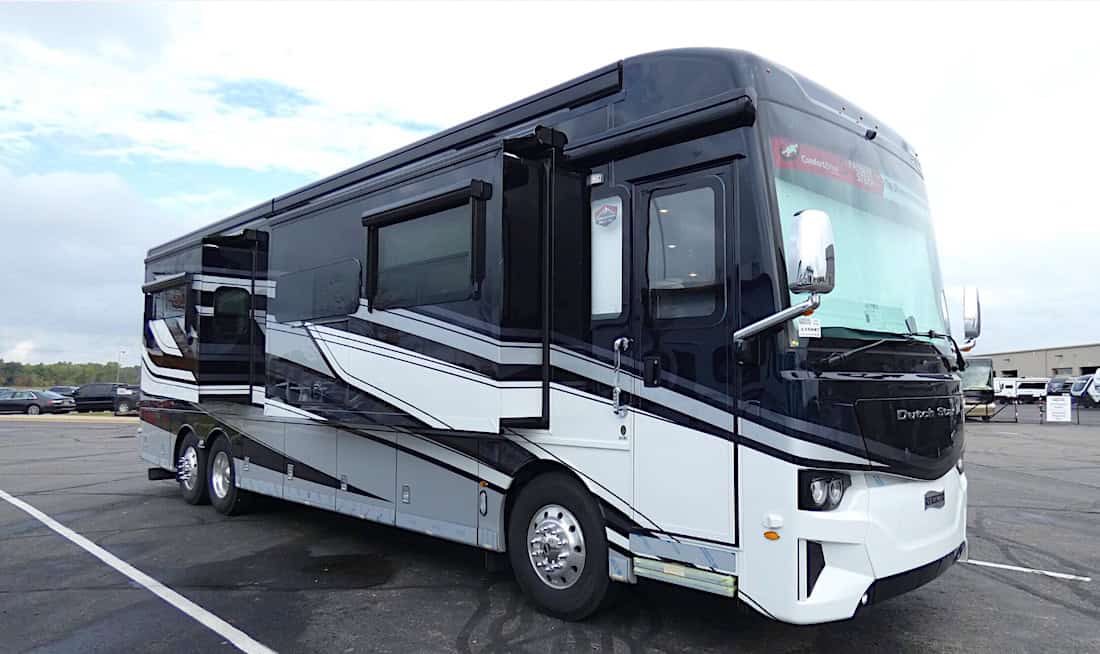
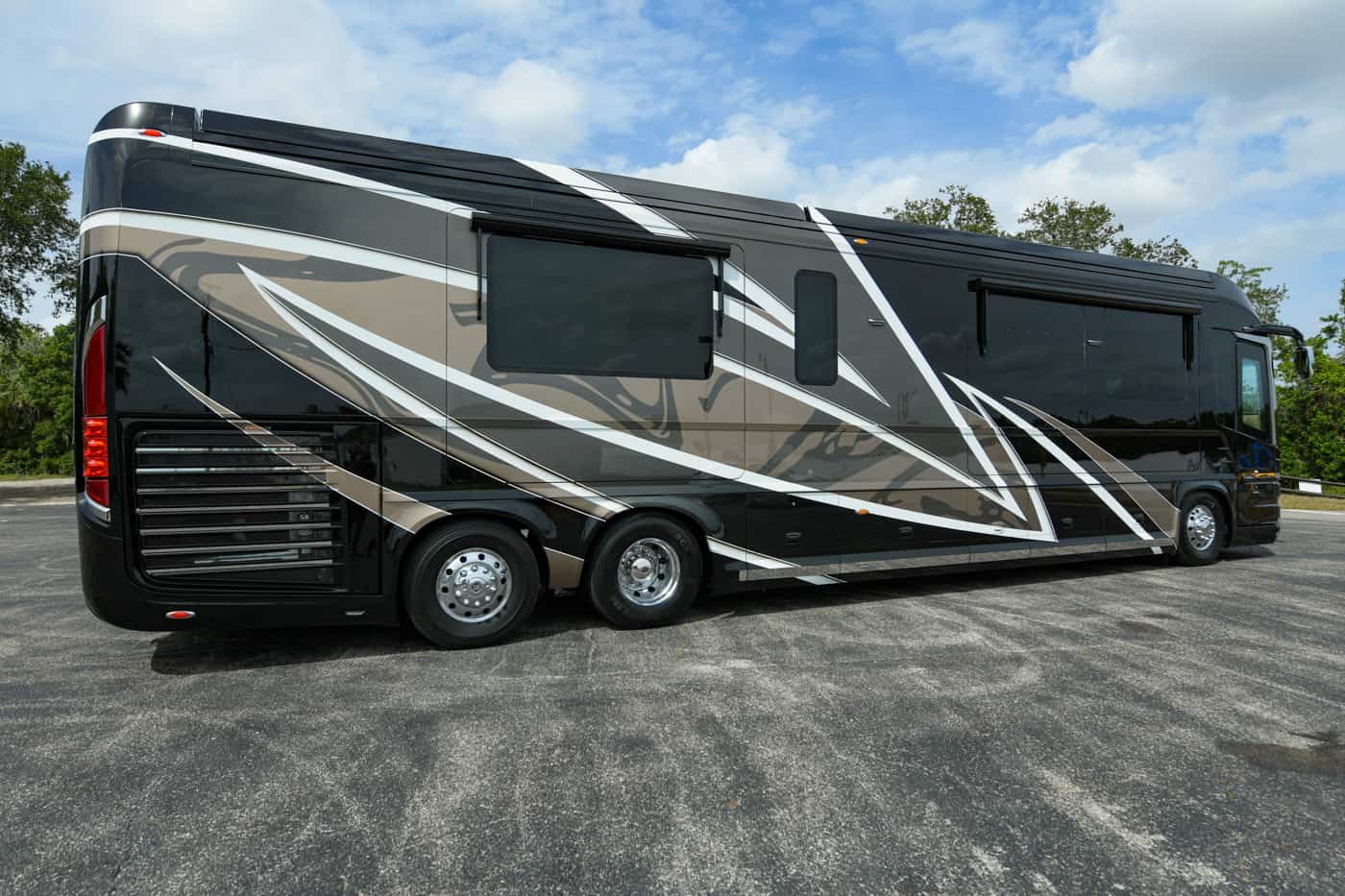
A diesel pusher is a Class A motorhome with a diesel engine mounted in the rear of the coach.
The word pusher refers to the fact that the engine is behind you, pushing the motorhome down the road instead of sitting up front under the driver and passenger like most gas Class A motorhomes.
Susan and I have spent a lot of time touring diesel pushers, and I have driven one. We seriously considered buying one before choosing our gas Class A, so I understand why so many buyers are attracted to them.
They usually ride better, run quieter up front, tow more, and feel more substantial on the road. But they also cost more to buy and maintain, so I would not assume a diesel pusher is automatically the right choice for every buyer.
What Makes a Diesel Pusher Different?
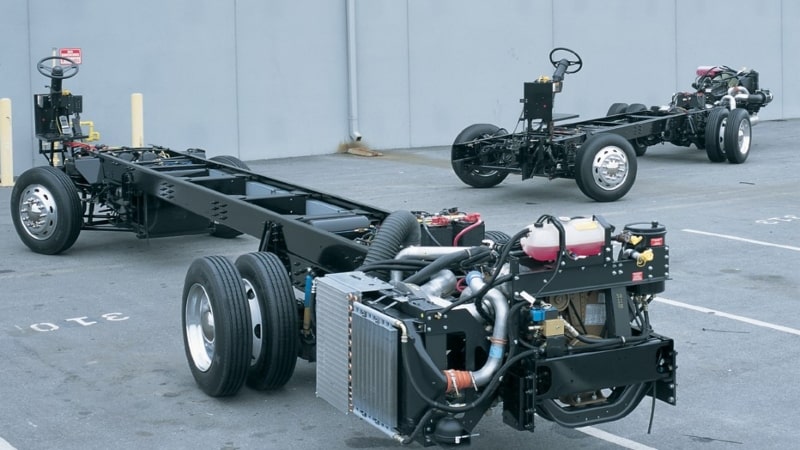
The biggest difference is where the engine sits.
In a traditional gas Class A, the engine is up front. In a diesel pusher, the engine is in the rear.
That rear-engine layout changes the driving experience more than many first-time buyers realize.
You hear less engine noise in the cockpit, and because diesel pushers are usually built on heavier chassis with air suspension and air brakes, they often ride smoother and feel more planted on the highway.
Many also have larger cargo bays, higher towing capacity, and more substantial overall construction—but that varies by model.
Why Are Diesel Pushers Quieter to Drive?
Because the engine is behind you.
That sounds obvious, but it makes a big difference.
In a front-engine gas Class A, the engine is right under the cockpit. When the transmission downshifts on a grade, you hear it.
With a diesel pusher, the engine noise is much farther away from the driver and passenger, which makes conversation and long travel days more comfortable.
Do Diesel Pushers Ride Better?
Usually, yes.
Most diesel pushers use air suspension, and the chassis is generally heavier than what you find under a gas Class A.
That combination can make bumps, bridge joints, and rough pavement feel much less harsh.
Having driven one and having spent years in our gas Class A, I can understand the appeal immediately.
Ride quality is one of the biggest reasons people move up to diesel.
Do Diesel Pushers Tow More?
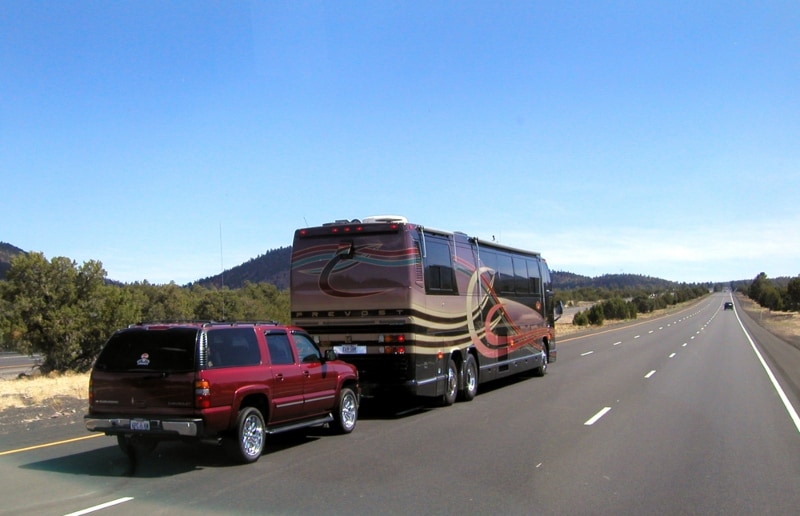
They often do, but always check the actual numbers.
Many diesel pushers have stronger towing capability than gas Class A motorhomes because of the heavier chassis, drivetrain, and hitch setup.
That can matter if you want to tow a heavy SUV, pickup, trailer, or other large vehicle.
But do not buy based on the word “diesel.” Check the exact GVWR, GCWR, hitch rating, and cargo carrying capacity of the coach you are considering.
We have a separate guide on how much a Class A motorhome can tow.
Do Diesel Pushers Have More Storage?
Many do.
One thing Susan and I notice when touring large diesel pushers is how much basement storage some of them have.
Large pass-through storage bays are common, and that can be a major advantage for full-timers or anyone carrying tools, outdoor gear, chairs, grills, and everything else that seems to follow you into RV ownership.
But again, floor plan and chassis design matter. I would never assume every diesel has more usable storage than every gas coach.
Are Diesel Pushers More Luxurious?
At the high end of the Class A market, yes, most luxury coaches are diesel pushers.
That usually has more to do with the type of coach being built than the diesel engine itself.
You are often getting heavier construction, higher-end cabinetry, tile floors, larger appliances, more insulation, more slides, bigger tank capacities, and premium chassis systems.
That is part of why diesel pushers cost so much more.
What Are the Downsides of a Diesel Pusher?
The biggest downside is cost.
You usually pay more to buy the coach, and routine service can cost more too.
Diesel engines use more oil, larger filters, and often require diesel-specific service facilities. Modern diesel emissions systems also add DEF, DPF, sensors, and regeneration into the ownership equation.
Repairs can get expensive quickly.
That does not mean diesel pushers are unreliable. It just means I would budget differently for one than I would for a gas coach.
If you are buying used, I would be especially careful about maintenance records and would absolutely want an independent inspection.
Do Diesel Pushers Get Better Fuel Economy?
They can, but I would not expect fuel savings to justify the purchase price by themselves.
Fuel economy varies a lot depending on coach weight, engine, speed, terrain, towing, and driving habits.
A large diesel pusher may get somewhat better mileage than a comparable gas Class A, but diesel fuel may also cost more per gallon.
I would look at fuel economy as one factor—not the reason to spend substantially more for a diesel coach.
Are Diesel Pushers Harder to Drive?
Not necessarily.
They are usually large, but the same is true of many gas Class A motorhomes.
The air suspension, steering systems, braking systems, and heavier chassis can actually make some diesel pushers feel more composed on the road.
The bigger learning curve is often the size of the coach, turning radius, air brakes, and understanding how the drivetrain and braking systems work.
If you are nervous about driving a large motorhome, training and practice matter more than whether the engine is gas or diesel.
Who Should Consider a Diesel Pusher?
I think a diesel pusher makes the most sense for buyers who care a lot about ride quality, towing capability, cargo capacity, long travel days, and higher-end coach construction.
It can also make sense for full-timers who want a heavier chassis and lots of basement storage.
Where I would be careful is assuming diesel should come first.
If the diesel coach has the wrong floor plan, costs more than you are comfortable spending, or forces compromises you will notice every day, then the drivetrain advantage may not be worth it.
Who Probably Does Not Need a Diesel Pusher?
If you are a weekend or seasonal traveler, tow a relatively light vehicle, and are trying to get the most floor plan and features for your money, a gas Class A may make more sense.
You can still travel across the country, climb mountains, and tow a vehicle behind a gas motorhome.
The decision comes down to what you value most.
My Bottom Line
A diesel pusher is simply a rear-engine diesel Class A motorhome, but that rear-engine design usually comes with a very different kind of chassis and driving experience.
I understand why people love them. I have driven one, and Susan and I have toured enough of them to appreciate the quieter cockpit, smoother ride, storage, and towing capability.
But I would still choose the right coach over the right engine.
If a diesel pusher gives you the floor plan, budget, towing capacity, and ride you want, it can be a fantastic motorhome.
If it does not, do not buy one just because someone tells you diesel is better.
Related Reading
How Much Can a Class A Motorhome Tow?
Is a Motorhome Extended Warranty Worth It?
About the Author:

Hi, I’m Mike Scarpignato, co-founder of TravelTrailerPro.com, RVBlogger.com, and MotorhomeFAQs.com and the RVBlogger YouTube Channel.
My wife, Susan, and I have been creating RV content since 2018. We travel the country visiting RV shows, touring dealerships, reviewing campers, testing gear, and spending plenty of time camping in our motorhome. Most of what we share comes from actually using RVs, making mistakes, fixing problems, and learning what works in the real world.
Susan is usually behind the camera on our RVBlogger YouTube channel, which has more than 215,000 subscribers. We also run RV Camping for Newbies, a private Facebook group with more than 275,000 members, and publish four weekly RV newsletters reaching more than 85,000 subscribers.
Our goal is simple: help beginners and experienced RVers choose the right RV, avoid expensive mistakes, and enjoy the RV lifestyle with a little less frustration.